
Truth or Dare: Spicy Couples
RacorwayTrivia
4.27.00 Reviews
- Version
- 1.4.4
- Installs
- 100.00K
- Age Rating
- Mature 17+
Screenshots

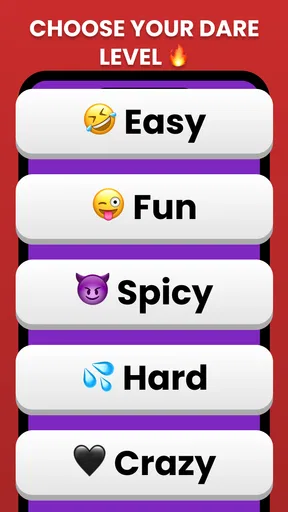

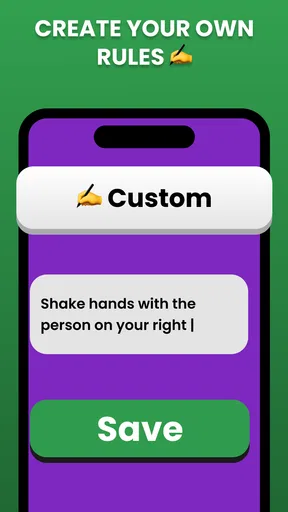

Our Review of Truth or Dare: Spicy Couples
 Analysis by Appyee
I tried Truth or Dare: Spicy Couples as a party trivia game rather than treating it like a conventional quiz, and that distinction matters immediately. Its appeal is not about proving who knows the most facts. It is about giving a group, a couple, or a few friends a prompt that can break the awkward silence and push the evening in a more playful direction. The mature tone makes it a very different choice from a family-friendly truth-or-dare deck.
The game is made by Racorway and is free to start. It sits in the trivia category, although the experience is closer to a guided social challenge game than a question-and-answer competition. The store presents it as suitable for spicy and dirty dares, couples, friends, and lively house parties, so I would treat the age label of Mature 17+ as an important part of the product rather than a minor footnote.
How the game feels when the room is ready to play
The best way to use it is with people who already understand the boundaries of the group. I would not open it at a mixed-age gathering, hand it to someone without warning, or assume that every player will enjoy the same level of embarrassment. The mature framing can be fun when everyone has opted in, but it can also make a casual game night uncomfortable if the audience expects harmless questions.
In a realistic everyday situation, imagine a couple hosting two close friends after dinner. Conversation slows down, nobody wants to suggest another board game, and someone opens this title to create a little momentum. It can work well there because the app supplies the next prompt instead of making one person invent challenges. That removes a small but real social burden: the host does not have to act as referee, writer, and entertainer at the same time.
I also found that the surrounding conversation matters more than the prompt itself. A truth can lead to a funny story, while a dare can fall flat if it is too personal, inconvenient, or simply unsuitable for the room. The app is therefore best understood as a source of sparks. It does not replace judgment, consent, or the ability to skip something that crosses a line.
A mature audience changes the decision
The Mature 17+ rating should guide both installation and who gets invited. Parents looking for a family party game should choose something else, even if the familiar name of truth or dare sounds innocent. Likewise, a workplace gathering, school event, or public party with people who do not know one another well is a poor setting for this particular version.
For adult friends who want a more daring tone, the rating is useful because it sets expectations before the first round. I prefer that clarity to a game that looks family-friendly and then surprises players with uncomfortable material. Still, a rating cannot tell you whether a particular prompt will suit your group. I recommend agreeing in advance that anyone may decline without having to explain why.
That simple rule improves the experience more than trying to appear fearless. It keeps the focus on shared amusement rather than pressure, and it gives quieter players a way to participate without being pushed into a performance. In my view, that is essential for a game built around personal answers and dares.
What makes it different from ordinary trivia
Most trivia apps reward recall, speed, or a high score. This one uses the trivia label for a social format in which the answer is often personal and the challenge happens away from the screen. That makes comparison with quiz apps slightly misleading. If you want a measurable contest with a clear winner, a standard general-knowledge game is a better match.
Compared with a physical truth-or-dare card deck, the phone is convenient and easy to bring out at a moment’s notice. You do not need to shuffle cards or remember where the box was stored. The trade-off is that a screen sits in the middle of a conversation, and the app cannot read the room as well as a thoughtful host can. A printed deck may feel warmer for a long evening, while this game is more practical for an improvised round.
Compared with inventing dares yourselves, the main benefit is reduced effort. The main weakness is reduced control. A group that enjoys designing clever, harmless challenges may find a homemade list more personal. Someone who wants an immediate prompt with a mature edge will probably appreciate the convenience here.
Managing progress without turning fun into pressure
I would not approach this as a progression game in the usual sense. The meaningful progress is social: people become more comfortable, stories become more open, and the group finds a rhythm. That can be enjoyable, but it also means there is no reason to force every round or treat refusal as failure.
A useful way to play is to begin with a short session and stop while the mood is still good. If the first prompts are accepted easily, continue. If the room becomes quiet or one person is repeatedly uncomfortable, change activity rather than escalating. This is one of the less obvious trade-offs of a mature dare game: more intensity does not automatically mean more entertainment.
I also suggest keeping the phone with the person who is currently reading, not passing it around after every prompt. That small workflow keeps turns moving and avoids a scramble over the device. At the same time, the reader should show the prompt before anyone acts, so the group can make an informed decision instead of reacting to a surprise.
For couples, alternating who selects or reads the challenge can prevent one partner from controlling the tone. For a larger group, drawing a clear order before starting avoids the same confident player answering first every time. These are not built-in achievements or hidden systems; they are practical ways to make the app’s simple format feel fairer and less repetitive.
Fairness depends on consent, not competition
The game does not become competitive in the same way as a quiz with correct answers. There is no meaningful advantage in being the fastest thinker, and a daring player should not automatically dominate the session. The fairest approach is to make participation voluntary and avoid rewarding someone for accepting a challenge that another person reasonably declines.
That point is especially important when friends have different comfort levels. A group can still enjoy the game if one person prefers truths and another prefers lighter dares, but only if those preferences are treated as normal. I would establish a skip rule before the first turn and avoid keeping a visible record of who refused what. Turning personal boundaries into a scorecard would damage the atmosphere quickly.
There is also a fairness issue around the host’s role. The person holding the phone can influence which prompt is read, so rotating that role is a better choice than letting one player quietly curate the evening. If a prompt seems unsuitable, skipping it should be treated as sensible moderation, not as cheating.
For couples, fairness can be more complicated because a challenge may affect the relationship beyond the game. A playful dare between partners is not automatically comfortable in front of friends, and a private truth may not belong in a group setting. I would separate couple-only rounds from group rounds and agree on that boundary first. The app can provide the prompt, but the players have to decide where it belongs.
Spending and the practical value of a free game
The game is listed as free, which makes it easy to test without committing money up front. That is useful for an occasional party because you can see whether the tone works for your friends before choosing a paid card set or another party title. I would still treat the free label as a reason to try it, not as a guarantee that every part of the experience will suit every group.
For a buyer comparing options, the real value is convenience. A free phone-based option can be preferable to purchasing a physical deck for a single weekend, especially if the group only wants a few rounds. On the other hand, people who dislike phones at social gatherings may consider a physical deck worth paying for because it keeps the table more present and gives the experience a tangible feel.
I would not choose this game solely because it costs nothing. The mature focus is the deciding factor. If your friends want clean questions, family play, or a competitive knowledge test, free access does not solve the mismatch. In that situation, a different trivia or party game would be better value even if it has a price.
The version shown for the game is 1.4.4, and it runs on Android 7.0 or later. That makes it accessible to people using older Android devices, although the practical experience will still depend on how comfortable everyone is sharing one phone. I would check the device before the gathering rather than discovering compatibility problems when guests arrive.
Where the format can create friction
The biggest limitation is not a technical detail; it is the dependence on the group’s mood. A prompt that feels funny among close friends may feel intrusive among acquaintances. Because the game is built around mature truths and dares, the cost of a poor match is higher than with a harmless quiz.
Another friction point is repetition in the social pattern. Even when the individual prompts vary, the basic cycle remains: read, react, answer or perform, then pass the turn. Players who need strategy, discovery, or a strong sense of progression may lose interest sooner than players who enjoy conversation. I would use it as a short activity between other plans rather than expecting it to carry an entire evening for every group.
The phone itself can also interrupt the atmosphere. Notifications, low battery, or a player checking another app can make the game feel less like a shared activity. My practical fix is to put the device on silent, charge it beforehand, and nominate one reader at a time. That does not change the software, but it makes the session noticeably smoother.
Finally, the mature premise can invite people to escalate beyond what the app actually asks. A player may try to make a dare more extreme for laughs, or friends may tease someone who declines. I consider that a clear sign to pause. The strongest version of this game is playful and consensual, not a test of who can tolerate the most pressure.
Who will enjoy it, and who should skip it
I would recommend it to adults who already enjoy truth-or-dare formats and want a ready-made source of spicier prompts. It is particularly suitable for couples who want a light activity at home, close friends who are comfortable discussing personal subjects, and small house parties where the group can agree on boundaries before playing.
I would skip it if you are searching for factual trivia, a family-safe game, a serious multiplayer competition, or a structured campaign with goals to unlock. It is also not the right choice for a group that includes people who feel obliged to participate. The mature rating is not something to work around; it is central to deciding whether the game belongs in your setting.
There is a useful middle ground for uncertain groups. Instead of launching into a long session, try a few rounds with a clear opt-out rule. If the tone feels natural, continue. If the group spends more time negotiating each prompt than enjoying it, switch to a conventional quiz or a neutral party game. That quick test is more informative than relying on the title alone.
Reach and confidence in the choice
The game has passed one hundred thousand installs and holds an average rating of 4.2 from roughly 1.6 thousand ratings. That suggests it has found an audience, but those figures should not be mistaken for proof that every group will like its mature style. A popular party format can still be a poor fit for a particular relationship, event, or age range.
Racorway’s release is relatively focused: the identity is clear, the intended audience is easy to understand, and the free entry point lowers the barrier to experimenting with it. I value that directness. At the same time, the app offers less appeal to anyone who wants broad trivia coverage or a neutral set of prompts that can be used anywhere.
My confidence in recommending it is therefore conditional rather than universal. I would suggest it to a friend with adult guests and a deliberately playful atmosphere, while warning them to set boundaries before the first turn. I would not recommend it blindly to a general party audience just because the familiar truth-or-dare concept sounds accessible.
My trust verdict after using it
The honest verdict is that this is a useful prompt generator, not a substitute for good group judgment. Its free format, mature positioning, and simple social structure make it easy to try when the right people are together. The strongest moments come when a prompt opens up laughter or conversation without making anyone feel cornered.
I like the fact that it can remove the awkward work of inventing dares, and I appreciate that its audience is signposted clearly enough for adults to make an informed choice. I also think its limitations are easy to overlook: it is not a knowledge contest, not a universal party game, and not automatically fair just because every player sees a prompt.
If you install it, prepare the room as carefully as you prepare the phone. Tell everyone the tone, agree that skipping is acceptable, rotate the reader, and keep the first session short. Those steps make a bigger difference than trying to push the game toward more extreme challenges.
For the right adult group, Truth or Dare: Spicy Couples can be an entertaining way to restart a quiet evening and give friends or partners something immediate to react to. For everyone else, especially families and players wanting traditional trivia, I would choose a different category of game. That narrow but clear purpose is exactly why I can recommend it honestly: it knows what kind of evening it is trying to create, and it works best when you do too.
Verdict
Strengths of Truth or Dare: Spicy Couples
- Large collection of playful questions and dares for couples
- Simple interface makes it easy to start a game quickly
- Works well for date nights, parties, or private couple time
- Promotes conversation and helps partners learn new things
- Rounds can be adapted to match your comfort level
Limitations of Truth or Dare: Spicy Couples
- Some prompts may feel too intimate or awkward for certain couples
- Adult-oriented content makes it unsuitable for younger players
- Replay value may decrease after seeing the same prompts
- Best enjoyed with a partner, limiting its usefulness for solo users
- May require clear boundaries and consent before playing
Similar Picks in This Category
View All
Millionaire 2026 Quiz & Trivia
Quiz & Trivia Games by Submarine Apps4.5

Brain Test 2: Tricky Stories
Unico Studio4.7

Trivia Crack: Brain Quiz Games
etermax4.4

QuizzLand. Quiz & Trivia game
Quiz & Trivia Games by Mno Go Apps4.8

Brain Test: Tricky Puzzles
Unico Studio4.7

Logo Quiz
bubble quiz games4.5
Frequently Asked Questions
What is Truth or Dare: Spicy Couples?
Truth or Dare: Spicy Couples is a relationship-focused party game designed for two partners who want to add playful, romantic, and more daring challenges to their time together. It combines personal truth questions with couple-oriented dares, helping players start conversations, laugh together, and explore different levels of intimacy in a private setting.
Is Truth or Dare: Spicy Couples suitable for all ages?
No. Because the game is created specifically for couples and may include suggestive or adult-themed questions and challenges, it is intended for mature users only. Before downloading, check the age rating shown on your Android or iOS store and review the app description carefully. It should only be played by consenting adults who are comfortable with the content.
Can couples choose how spicy the questions and dares are?
The game is generally designed around different degrees of romantic and daring content, allowing couples to select activities that match their comfort level. However, the exact categories and controls can vary by version. Players should discuss boundaries before starting, skip anything uncomfortable, and remember that no question or dare should ever be treated as an obligation.
Does Truth or Dare: Spicy Couples require an internet connection?
The basic game may work without a constant internet connection once it has been installed, but some features can depend on the app version, advertisements, updates, or optional purchases. Availability may also differ between Android and iOS. For the most reliable experience, open the app once while connected and check whether your preferred decks or modes are available offline.
Is Truth or Dare: Spicy Couples free to download and play?
The app may be available as a free download, but free access does not always mean that every feature is included. Some versions can contain advertising, locked question packs, subscriptions, or in-app purchases for additional content. Review the store listing and the payment details inside the app before confirming a purchase, especially if multiple people use the same device.
Play our best games!


